


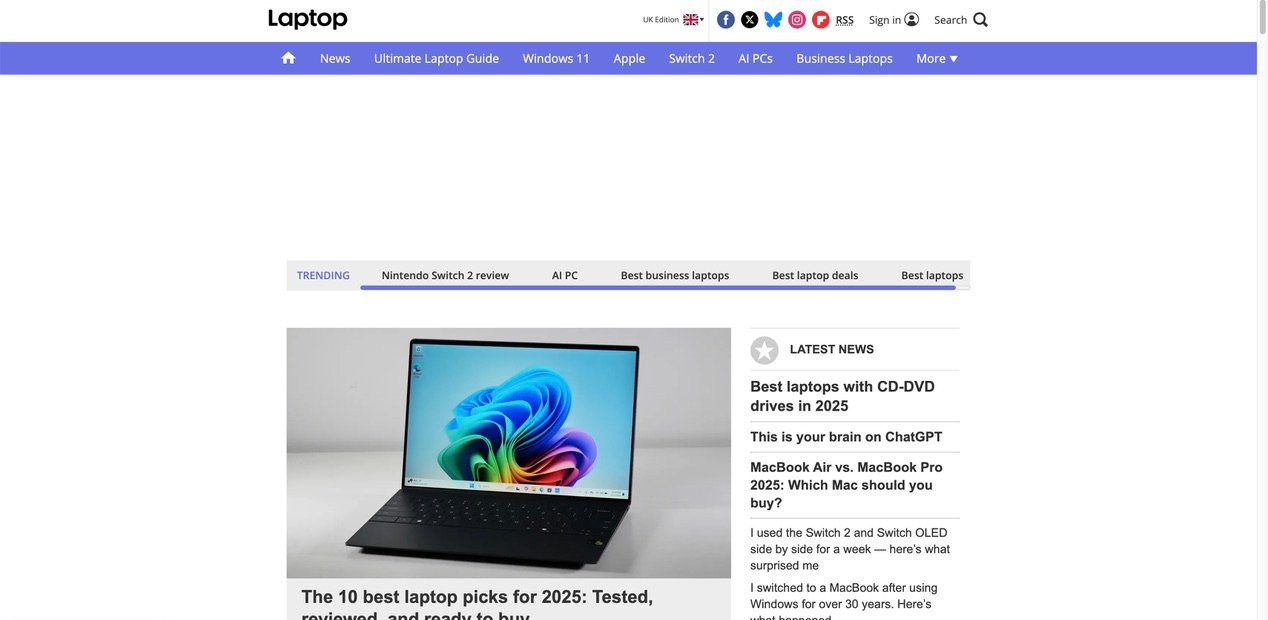
Guide: How to Pitch & Write for LaptopMag (UK) — Practical steps for beginners
This guide helps you learn the LaptopMag audience, shape pitchable ideas, prepare samples, and submit a clear pitch — with templates, checklists, and resource links so a beginner can follow along and start earning.
Important note: LaptopMag published an announcement that the site is “closing its lid” and that its articles will remain online as a final archive. Before spending time pitching, read the short update below (it matters). If LaptopMag isn’t accepting new work, use the same guide to pitch sister sites like Tom’s Guide or other tech outlets.
Section 1 · About the publication
What LaptopMag UK publishes — and a critical status update
LaptopMag is (or was) a specialist site focused on laptops, tablets, 2-in-1s, mobile PCs, related peripherals (monitors, mice, keyboards), and practical how-to guides and reviews for buyers and enthusiasts. The site runs separate regional sections (US, UK, Canada, Australia) with regions like the UK accessible at laptopmag.com/uk. :contentReference[oaicite:0]{index=0}
Important (must-read): LaptopMag published a site notice that it is closing after ~34 years; their staff said the site will remain online as an archive but that this is the final post. For writers, that changes things: editorial hiring and new freelance commissioning may be paused or stopped. If you plan to pitch, read that notice first and consider pitching sister Future titles (e.g., Tom’s Guide) as an immediate alternative. :contentReference[oaicite:1]{index=1}
- Hands-on product reviews (laptops, monitors, accessories)
- How-to guides and troubleshooting articles (battery life, drivers, upgrades)
- Buying guides and roundups (“best X for 2025”)
- Industry explainers and occasional features (CES coverage, silicon trends)
These are practical, test-driven articles aimed at buyers and tech enthusiasts.
LaptopMag’s official pitch / contributor guidance lists where to send pitches and what they look for. The pitch guidance page shows an edit team email (laptopmag@futurenet.com) and lists the kinds of stories they’re seeking. If you plan to pitch, read that page first. :contentReference[oaicite:2]{index=2}
| Article type | Why it worked | Where to host sample |
|---|---|---|
| Review | Real testing, benchmarks, purchase guidance | Your blog + GitHub photo/tests |
| How-to / Troubleshooter | Step-by-step fixes, clear screenshots | CodePen, GitHub repo, live demo |
| Buying guide | Curated picks with reasoning & testing notes | Medium, Dev.to, personal site |
Section 2 · Fit your idea
Is your idea LaptopMag-shaped (practical, tested, buyer-focused)?
LaptopMag liked ideas that solved a purchasing decision or real user problem. Use these checks to tighten your angle:
Will this help someone buy or fix something?
If the answer is yes — for example “How to get 9+ hours battery life on X laptop” — you have a strong starting point.
Can you include real testing or measurable results?
Editors favored concrete evidence: benchmark numbers, before/after screenshots, test settings, and reproducible steps.
Is the angle fresh or better-explained than existing coverage?
Search the site for similar headlines. If the subject exists, find a narrower or clearer angle (e.g., focusing on a specific use case or device model).
Section 3 · Prepare before you pitch
Build 3–5 strong samples that prove you can deliver
Before pitching LaptopMag (or any trusted tech outlet) you should have demonstrable samples: real reviews, a how-to with reproducible steps, or a detailed buying guide with selection criteria.
- Your own blog (best control & portfolio ownership).
- Dev.to or Medium (quick publication, audience exposure).
- Smaller tech blogs that accept freelancers (to get editor clips).
- GitHub/CodePen for demos and test scripts.
- Clear headline and one-sentence promise (“What reader will get”).
- Short intro describing context & device/setup.
- Step-by-step tests or instructions, with numbers/screenshots.
- Links to any tools, firmware, drivers, repos or test files.
- Short conclusion: what you learned and recommended next steps.
| Sample | Minimum length | Why it helps |
|---|---|---|
| Review with tests | 1,200–2,000 words | Shows ability to test and contextualize hardware |
| How-to (fix, optimize) | 1,000+ words | Shows clear instructions and troubleshooting |
| Buying guide | 1,200+ words | Shows curation and recommendation skills |
Section 4 · Pitch workflow + template
Exactly what to send (a beginner-friendly SOP)
Follow this compact workflow — it’s the same structure used for many editorial pitches and matches LaptopMag’s expectations on clarity and evidence. For LaptopMag, the pitch guidance historically asked contributors to email pitches and include links to relevant samples. Always check their live guidance page or contact email before sending. :contentReference[oaicite:4]{index=4}
Subject line
Keep it short and precise. Example: Pitch: Hands-on test — Improve battery life on Dell X15 (benchmarks included)
Opening paragraph (1–2 sentences)
Say who you are and your one-sentence idea. Example: “I’m [name], a freelance reviewer/engineer who tests laptops. I’d like to write a 1,500–2,000 word hands-on guide showing how to squeeze 20–30% more battery life from Dell X15 (Windows 11) with settings, benchmark numbers, and a reproducible test suite.”
Bulleted outline (4–7 sections)
Provide short bullets for each section — intro, test setup, step 1/2/3, results, conclusion. Editors want to see the structure clearly.
Links to samples & credentials
Add 2–3 links to your best work (reviews, GitHub test repo, or blog). If you have benchmark logs or reproducible scripts, link them. Example: GitHub repo, CodePen, Medium post.
Logistics & availability
State your availability, suggested word count, and time estimate to deliver a first draft (e.g., 2–3 weeks). If you expect compensation, it’s okay to say “I’m available to invoice for this piece; please advise on rates if selected.”
Subject: Pitch: Hands-on guide — [short idea]

Hi LaptopMag team (or Editor name),

I’m [Your Name], a freelance tech writer and reviewer (link to portfolio). I’d like to pitch a [~1,200–2,000] word hands-on article: “[Clear headline that promises a result].”

Outline:
• Intro — why this matters (1–2 lines)
• Setup — hardware, OS, tools, test environment
• Step 1 — [first actionable step]
• Step 2 — [next step]
• Results — before/after numbers, screenshots
• Conclusion — recommendations and links to downloads/repo

Samples: [link 1] • [link 2]
GitHub / test files: [link]
I can deliver a first draft in ~2 weeks. Happy to adapt angle or length.

Thanks for considering — best,
[Your Name] — [short credentials] — [email] — [phone/availability]
Section 5 · Money & invoices
How contributors were typically paid — what to expect
LaptopMag’s contributor guidance historically stated that Future plc (the group behind LaptopMag) pays contributors after publication and that payment processing typically took about 30 days once an invoice is submitted. If you are offered work, check the exact payment terms with the editor and request the invoicing email and purchase order number. :contentReference[oaicite:5]{index=5}
- Offer / assignment agreed with editor.
- Write piece and submit to editor for revisions.
- Publish and then submit invoice to the publisher finance team.
- Payment processed (often within ~30 days historically).
- Get the editor’s confirmation in writing (email) with agreed fee.
- Ask for the exact invoicing address and remit details before you submit your invoice.
- Keep copies of delivery notes and versioned drafts in case of disputes.
Section 6 · Ethics, links & conflicts
Honesty, testing, and disclosing affiliations
Be transparent. If a manufacturer supplied a laptop or accessory, disclose it. If you used affiliate links or had any other relationship with a vendor, disclose it in the article or pre-publication conversation. Editors take conflicts seriously; full disclosure protects your reputation and the publication. LaptopMag itself discloses affiliate relationships on its site. :contentReference[oaicite:6]{index=6}
- Submit unverifiable benchmark numbers or fake tests.
- Copy text from other sites without permission or correct attribution.
- Misrepresent device ownership or usage.
- Include test methodology, hardware specs, and reproducible steps.
- Host test files on GitHub or provide downloadable logs.
- Disclose gifts, loans, or affiliate links in your pitch and article.
Section 7 · Micro-SOP checklist
Final checklist before sending a pitch
Section 8 · FAQs & alternative outlets
Quick answers and where else to pitch
- LaptopMag UK — homepage (regional edition). :contentReference[oaicite:9]{index=9}
- How to pitch your ideas to Laptop Mag — official guidance. :contentReference[oaicite:10]{index=10}
- LaptopMag — About & contact (includes contact email). :contentReference[oaicite:11]{index=11}
- Tom’s Guide — Future plc sister site (good alternative). :contentReference[oaicite:12]{index=12}
- Dev.to — publish quick technical pieces and gain visibility
- Medium — paywall/publication options for tech writing
- GitHub — host test files & reproducible code
- How to pitch an idea (practical tips on pitch structure)